

At a glance
| Who it’s for | Anyone who wants a fresh look at a cataract diagnosis, a surgery recommendation, a lens recommendation, or a cost quote |
| What happens | A complete eye exam, a review of your records and quote, and a clear explanation of your options |
| Seen by | Dr. Jones or Dr. Triana. Dr. Jones performs all of our cataract surgery |
| Pressure to schedule? | None. You decide on your own timeline |
| Bring | Glasses, medication and eye drop list, insurance card, and any records or quotes from your other doctor |
| Visit cost | Billed as a standard medical exam through medical insurance – see insurances accepted |
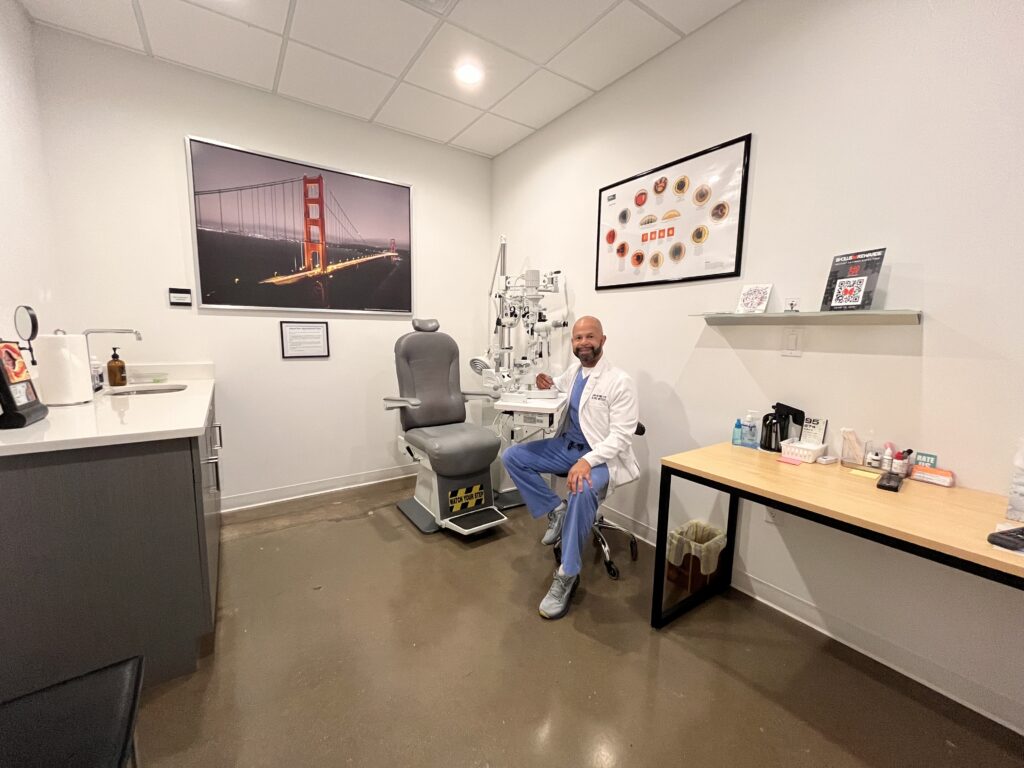
Is it okay to get a second opinion?
Yes. A second opinion is routine, especially for an elective surgery, and good surgeons expect it. Seeing us won’t offend your current doctor, and you’re free to go back to whichever doctor you trust. A second opinion may simply confirm what you were told, and that can give you peace of mind. It may also give you a different timeline, a different lens or approach, or a clearer explanation of the cost.
Why patients seek a second opinion
Patients tell us they come for reasons like these:
- They aren’t sure their vision is bad enough to need surgery.
- They feel they were rushed into scheduling.
- They received a cost quote that seems high, or they don’t understand what it includes.
- They’re confused by the lens choices (standard, toric, EDOF, multifocal) or by laser vs. traditional surgery.
- They have other eye conditions, such as glaucoma, diabetic retinopathy, or macular degeneration, and want to know how those affect surgery.
- They want to meet a different surgeon before putting their eyes in someone’s hands.
None of these means anyone did anything wrong. They’re good reasons to ask more questions.
Do all cataracts need surgery?
No. A cataract is a clouding of the eye’s natural lens that develops slowly with age. Most patients consider surgery when a cataract starts to interfere with daily life, such as driving (especially at night), reading, working on a screen, or recognizing faces, and when new glasses can no longer fix it. Insurance, including Medicare, also generally requires that your vision problems affect your daily activities.
Sometimes there are other reasons to remove a cataract earlier. For example, a cataract can make it harder to examine or treat the back of the eye, or in some eyes it can contribute to narrow angles and eye pressure problems. Only an exam can tell which applies to you. Learn more about cataracts and cataract surgery
Understanding your cost quote
Cataract surgery costs vary widely, and a quote can be hard to compare unless you know what’s inside it. A complete estimate typically covers:
- The surgeon’s fee
- The surgery center (facility) fee
- Anesthesia
- The lens implant: standard (monofocal), or premium (toric, EDOF, multifocal)
- Laser and astigmatism correction, if used
- Medications and follow-up visits
Here’s how the pieces generally work:
- Insurance, including Medicare, generally covers standard cataract surgery with a standard lens. You’re responsible for your deductible and copay.
- The laser, astigmatism correction, and premium lenses are usually out-of-pocket upgrades. They aren’t required, and a standard lens is a good choice for many patients.
- At our practice, laser cataract surgery costs as low as $2,500 per eye, and premium lenses add to that base cost. We review your costs with you before surgery.
If you already have a quote, bring it. We can’t judge another practice’s pricing, but we can explain what it covers and how our options compare.
Questions to ask any cataract surgeon
- Why do you recommend surgery now, and what happens if I wait?
- How is my vision affecting what I do every day?
- Do I have any other eye conditions that affect my surgery or results?
- What lens options do I have, and which do you recommend for me and why?
- Is the laser necessary for my eyes, or is traditional surgery a good choice?
- What exactly is included in the cost, and what would insurance cover?
- Who will perform my surgery, and how many have they done?
- What are the risks for me specifically?
- What is the plan for follow-up care?
What happens at a second-opinion visit
- Bring your information. Your glasses, list of medications and eye drops, insurance card, and any records, imaging, measurements, or quote from your other doctor. If you don’t have records, that’s okay.
- A complete eye exam. We check your vision and your glasses prescription, your eye pressure, the front of your eye (including the cataract), and the back of your eye with dilating drops. We may use OCT to scan the retina.
- A conversation. We ask how your vision affects your daily life and what matters to you.
- Our recommendation, in plain language. Dr. Jones or Dr. Triana explains what they see and whether surgery is appropriate now, later, or not at all, along with your lens and procedure options.
- Costs explained. If surgery makes sense, we explain what it costs and what insurance covers before you decide.
- You decide. Take as much time as you need.
What you might hear
- “It’s not time yet.” Your cataract can be monitored, with regular exams.
- “Surgery is reasonable.” We explain your options and what to expect.
- “A different approach may fit better.” For example, a different lens, or traditional instead of laser surgery, or the other way around.
- “Another eye condition needs attention first.” For example, glaucoma, dry eye, or retinal disease.
- “Here’s what your quote includes.” And how financing, such as CareCredit, could work if you choose upgrades.
Why choose San Antonio Eye & Face Institute for a second opinion
- Physician-owned. The doctors who examine you are the doctors who own the practice, so there’s no corporate sales pressure.
- An experienced cataract surgeon. Dr. Relief Jones, III is board-certified by the American Board of Ophthalmology and has performed thousands of cataract surgeries over more than two decades. Read Dr. Jones’s bio
- Full range of options. Standard, laser, and premium lens cataract surgery, so we can recommend what fits your eyes, not just what’s available.
- Honest answers. If surgery isn’t needed yet, we’ll say so.
- Cost clarity. We explain what costs what, and what insurance covers, before you decide.
Schedule a Second-Opinion Visit
Call (210) 485-1488
Frequently asked questions
Is it okay to get a second opinion about cataract surgery? Yes. A second opinion is routine and reasonable, especially for an elective surgery. Good surgeons expect it and welcome informed patients.
Will seeing you offend my current eye doctor? No. Patients seek second opinions often, and you are free to continue with whichever doctor you trust.
How do I know if I really need cataract surgery? Most people consider surgery when a cataract interferes with daily life, such as driving, reading, or work, and glasses can no longer fix it. Surgery is usually elective, so you can take time to decide. Rarely, a cataract needs treatment sooner because it affects other eye health. An eye exam tells you which applies to you.
Do all cataracts need to be removed right away? No. Cataracts usually progress slowly, and many can be monitored until they affect your vision or lifestyle. Your doctor will tell you if a cataract needs earlier treatment for another reason, such as another eye condition.
What should I bring to a second-opinion appointment? Bring your glasses, your list of medications and eye drops, your insurance card, and any records from your other eye doctor, including exam notes, measurements, imaging, and the surgery cost quote if you have one.
What happens at a second-opinion visit? You will have a complete eye exam, we review your history and your records, and Dr. Jones or Dr. Triana explains what they find, whether surgery is appropriate now, and your options. You are under no obligation to schedule surgery.
Why do cataract surgery costs vary so much? Costs vary with the type of lens implant, whether laser or astigmatism correction is used, the facility and anesthesia fees, and your insurance. Standard cataract surgery with a standard lens is generally covered by Medicare and many plans, while the laser, astigmatism correction, and premium lenses are usually out-of-pocket upgrades.
Can a second opinion tell me whether my cataract surgery quote is fair? We cannot judge another practice’s pricing, but we can explain what a cataract surgery estimate should cover, how standard, laser, and premium options differ, and what our own costs are, so you can compare.
How much does cataract surgery cost at your practice? Laser cataract surgery costs as low as $2,500 per eye, and premium IOLs add to this base cost. Standard cataract surgery with a standard lens is generally covered by insurance, including Medicare. We review your costs with you before surgery.
Will you pressure me to have surgery? No. Our goal is to help you make an informed decision. If surgery is not needed yet, we will tell you, and if it is, we will explain your options and let you decide on your own timeline.
Can I get a second opinion on a laser or premium lens recommendation? Yes. We can explain whether the laser or a premium lens makes sense for your eyes and goals, and we will tell you honestly if a standard lens may be all you need.
Do I need records from my other doctor to be seen? No. Records help, but if you do not have them we will examine you from the beginning.
Who will see me for a second opinion? You may be seen by Dr. Jones or Dr. Triana, and Dr. Jones performs all of our cataract surgery.
Related pages
Cataract surgery · Laser cataract surgery · Premium lens options (IOLs) · Anesthesia for cataract surgery · Insurances accepted · Dr. Relief Jones, III · Contact
This page is for general education and isn’t medical advice. Only an eye doctor can tell you whether cataract surgery is right for you.