

At a glance
| Type of anesthesia | IV sedation (monitored anesthesia care) plus a numbed eye. General anesthesia is not typically used |
| Who gives it | An anesthesiologist gives the sedation. Dr. Jones numbs the eye and performs the surgery |
| Will I be asleep? | No. You’re relaxed and drowsy, not fully asleep |
| Will I feel pain? | No. You may feel water dripping and mild pressure |
| Monitoring | The anesthesiologist is present throughout and monitors your vital signs |
| After surgery | Drowsy for a few hours. A friend or family member must drive you home, and you can’t drive yourself for about 24 hours |
| Where | American Surgery Center of South Texas, 12838 Vista Del Norte, San Antonio |
Will I be asleep for cataract surgery?
No. You won’t be fully asleep, but you’ll be relaxed. Cataract surgery is a short procedure on the front of the eye, so it doesn’t require the deep sleep of general anesthesia. Instead, two things work together to keep you comfortable:
- IV sedation. An anesthesiologist places a small IV in your arm and gives you medicine to help you relax. You may feel drowsy, and some patients doze lightly, but you can usually respond if needed.
- A numbed eye. Dr. Jones numbs the eye with a local anesthetic, so you don’t feel pain during the surgery.
Why not general anesthesia?
General anesthesia means you’re fully unconscious and usually need help breathing. It carries more risk than sedation and a longer recovery, and for most cataract patients it isn’t necessary. Sedation plus a numbed eye gives you comfort and safety with a quicker recovery. A different approach may be recommended for certain patients (see below).
Types of anesthesia used in cataract surgery
| Type | How it works | Awake? |
|---|---|---|
| Topical | Numbing drops or gel placed on the eye | Yes, usually with sedation |
| Local anesthetic inside the eye | A small amount of numbing medicine placed inside the eye during surgery | Yes, usually with sedation |
| Regional block (injection) | Numbing medicine injected around the eye | Yes, usually with sedation |
| General anesthesia | You’re fully asleep | No. Not typically used for cataract surgery |
At San Antonio Eye & Face Institute, we use IV sedation along with a numbed eye. Dr. Jones numbs the eye with drops and local anesthetic inside the eye. The anesthesiologist provides sedation through your IV.
What it’s like
Before surgery. After you check in at the American Surgery Center of South Texas, nurses ask standard medical questions, place an IV in your arm, and give you dilating drops. You’ll meet the anesthesiologist before you go to the operating room.
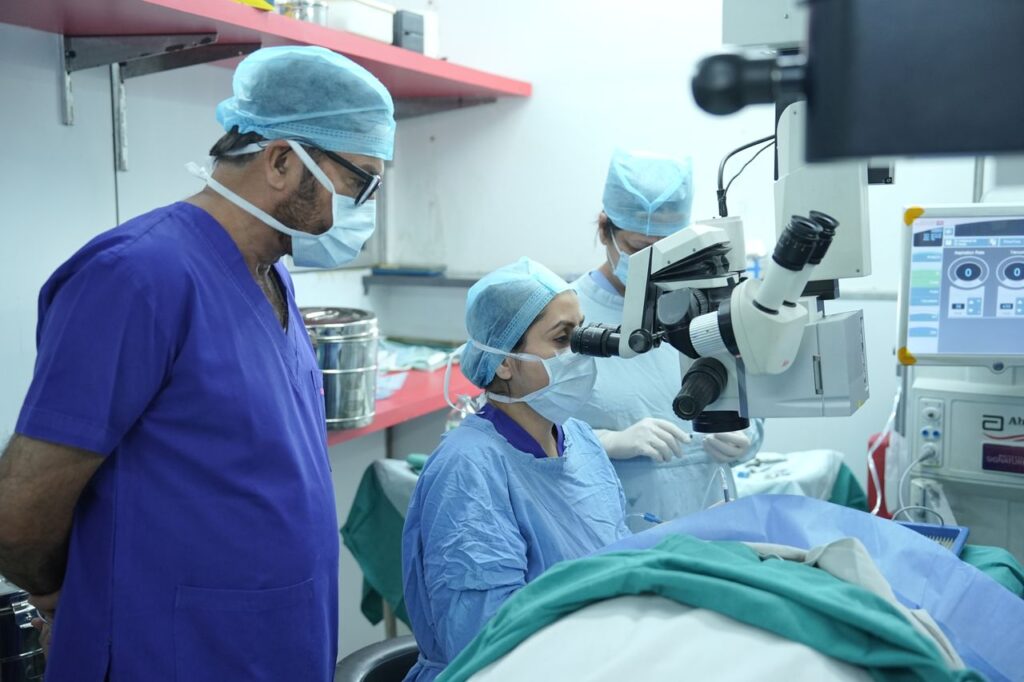
In the operating room. The team cleans your eye and places a drape over your face, exposing only the eye being operated on. A frame keeps the drape off your face so you can breathe easily, and you receive fresh oxygen through your nose. The anesthesiologist gives you sedation and stays with you throughout.
What you’ll feel. You’ll be relaxed and may feel drowsy. You shouldn’t feel pain. You may feel water dripping on your eye and mild pressure.
What you’ll see and hear. You won’t see the details of the surgery. Many patients see colorful, kaleidoscope-like lights. You may hear Dr. Jones speaking with the surgical assistant, who hands him instruments and medications, and the team will speak with you.
Staying comfortable. Try to stay still and relaxed. If you feel the need to cough or sneeze, or are uncomfortable, say so and the team will help.
Afterward. You’ll rest briefly in the recovery area, where a nurse reviews your instructions and gives you something to drink and a small snack before a friend or family member takes you home.
How we keep you safe
- An anesthesiologist, a physician specially trained in anesthesia, is with you throughout, adjusting your sedation and monitoring your vital signs including your heart rate and rhythm, blood pressure, and oxygen level.
- We review your health history, medications, and allergies before surgery.
- Sedation for cataract surgery is lighter than general anesthesia, which means fewer risks and a faster recovery.
Preparing for anesthesia
- Tell us about your health. Share your medical history, including heart, lung, or kidney conditions, sleep apnea, and any past problems with anesthesia, as well as drug allergies and prior surgeries.
- List every medication, including blood thinners, diabetes medicines, supplements, and eye drops. We’ll tell you which to take and which to hold. Don’t stop any medicine on your own.
- Follow the fasting instructions. You’ll typically be asked not to eat or drink anything for 8 hours before surgery. We review these at your measurements appointment.
- Arrange a ride. A friend or family member must take you home. The surgery center won’t release you to a rideshare service such as Uber or Lyft for safety reasons.
- Wear comfortable clothes, skip jewelry and makeup, and shower before you arrive.
After sedation
- You may feel drowsy for a few hours. Plan to rest for the remainder of the day.
- You can’t drive for about 24 hours. A friend or family member must take you home.
- Avoid alcohol and important decisions for the rest of the day, and follow your post-operative instructions.
- Most patients have no significant side effects. Occasionally, patients feel mild nausea or grogginess.
Risks of anesthesia
Sedation for cataract surgery is generally very safe, and it’s lighter than general anesthesia. Possible side effects include drowsiness, nausea, and, rarely, changes in breathing or heart rhythm or an allergic reaction, which is why an anesthesiologist monitors you throughout. If an injection is used to numb the eye, there are small additional risks such as bruising or bleeding around the eye, and very rarely more serious complications. Talk through your personal risks with your anesthesiologist and surgeon.
Anxious or claustrophobic?
You’re not alone. Many people are nervous about eye surgery. Tell us at your consultation. IV sedation helps you relax, the frame holds the drape off your face so you can breathe easily, you receive fresh oxygen, and our team talks with you throughout the procedure.
Who might need a different approach?
Some patients may need a different type of anesthesia or extra planning, including children, people who can’t lie still or flat, people with severe anxiety, and people with certain medical conditions. If this might be you, tell us at your consultation so we can plan the safest option.
Cost and insurance
Anesthesia is billed separately from the surgeon and surgery center. Anesthesia for cataract surgery is generally covered with standard and laser cataract surgery by Medicare and most plans; your deductible and copay may apply. See insurance we accept
Why choose San Antonio Eye & Face Institute
- Physician-owned. You’re cared for directly by your doctors, from your first exam to your last follow-up.
- A physician anesthesiologist with you throughout your surgery.
- An experienced cataract surgeon. Dr. Relief Jones, III is board-certified by the American Board of Ophthalmology and has performed thousands of cataract surgeries over more than two decades. Read Dr. Jones’s bio
- Clear instructions before and after surgery, so there are no surprises.
Schedule a Cataract Consultation
Call (210) 485-1488
Frequently asked questions
Is general anesthesia used for cataract surgery? General anesthesia is not typically used in cataract surgery. Instead, an anesthesiologist gives IV sedation to help you relax while your ophthalmologist numbs the eye with a local anesthetic so you are comfortable during the procedure.
Will I be asleep during cataract surgery? You will not be fully asleep. IV sedation makes you relaxed and drowsy, and some patients doze lightly, but you can usually respond if needed. Your eye is numbed so you do not feel pain.
Will I feel pain during cataract surgery? You should not feel pain. Your eye is numbed, and you may feel water dripping on the eye and mild pressure. You will not see the details of the surgery, though many patients see colorful lights.
What is IV sedation? IV sedation, also called monitored anesthesia care, is medicine given through a small IV in your arm to help you relax. An anesthesiologist adjusts it throughout surgery and monitors your vital signs.

How is my eye numbed for cataract surgery? Your ophthalmologist places a local anesthetic on or in the eye so the eye is numb for the procedure. Your doctor will explain exactly how your eye will be numbed at your consultation.
Who gives the anesthesia? An anesthesiologist, a physician specially trained in anesthesia, gives your IV sedation and stays with you throughout the surgery. Dr. Jones, your ophthalmologist, numbs the eye and performs the surgery.
Can I eat or drink before cataract surgery? You will typically be asked not to eat or drink anything for 8 hours before surgery. We review the fasting rules at your measurements appointment, and you should follow them exactly.
Should I take my regular medications before cataract surgery? Tell us about every medication you take, including blood thinners and diabetes medicines, at your pre-surgery visit. We will tell you which to take and which to hold, so do not stop any medicine on your own.
What if I am anxious or claustrophobic? Let us know. IV sedation helps you relax, a frame keeps the drape off your face so you can breathe easily, and you receive fresh oxygen through your nose. Our team talks with you throughout the procedure.
What are the risks of anesthesia for cataract surgery? Sedation for cataract surgery is generally very safe and is lighter than general anesthesia. Possible side effects include drowsiness, nausea, and, rarely, changes in breathing or heart rhythm or an allergic reaction, which is why an anesthesiologist monitors you throughout. Tell the anesthesiologist about your health history, allergies, and any past problems with anesthesia.
Can I drive home after cataract surgery? No. You must have a friend or family member take you home, and the surgery center will not release you to a rideshare driver such as Uber or Lyft for safety reasons. You will need about 24 hours before you can drive yourself.
How long will the sedation affect me? Most patients feel drowsy for a few hours. Plan to rest for the remainder of the day, avoid alcohol and important decisions, and follow the instructions you are given.
Who might need a different type of anesthesia? Some patients, such as children, people who cannot lie still or flat, or people with severe anxiety or certain medical conditions, may need a different approach. Tell us about any concerns at your consultation so we can plan the safest option for you.
This page is for general education and isn’t a substitute for a consultation. Your anesthesiologist and surgeon will explain the plan that’s right for you.