

At a glance
| Goal | Lower eye pressure to a target that protects your optic nerve |
| How drops work | Reduce fluid production, increase fluid drainage, or both |
| Main types | Prostaglandin analogs, beta-blockers, alpha agonists, carbonic anhydrase inhibitors, Rho kinase inhibitors, and combinations |
| Preservative-free options | Available for several drugs, usually as single-use vials or special multi-dose bottles |
| Drug-releasing implants | Durysta and iDose TR. Not cures, and generally considered only in extenuating circumstances |
| If drops aren’t enough | Laser (SLT), minimally invasive glaucoma surgery, or traditional surgery |
| Cure? | No. Treatment slows or stops vision loss but cannot restore vision already lost |
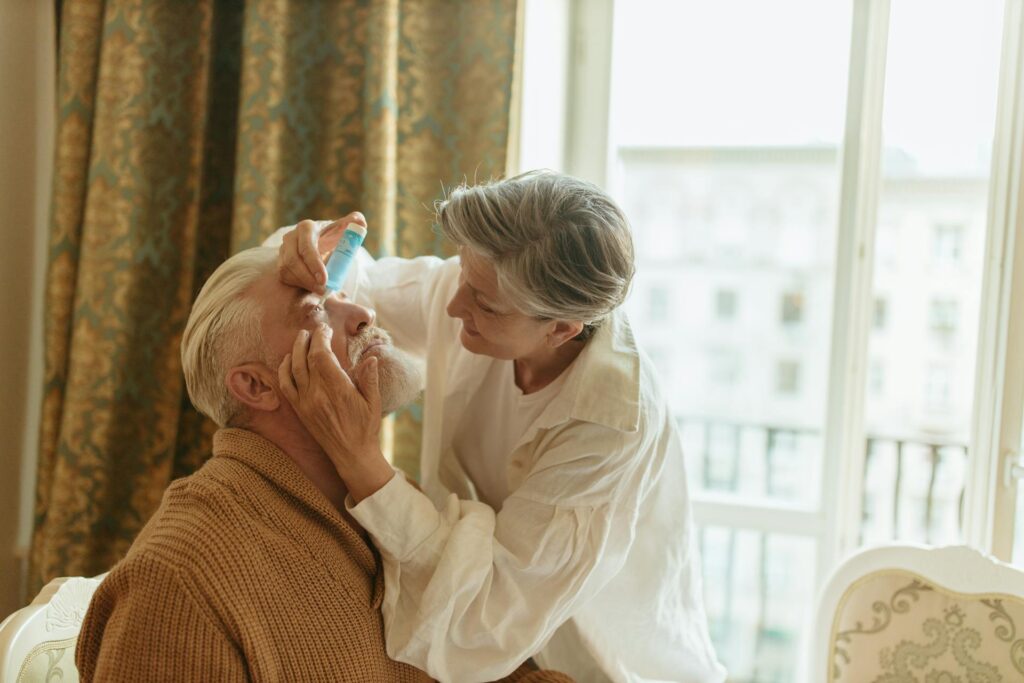
How glaucoma drops work
Fluid (aqueous humor) is constantly made inside your eye and drains out through a channel in the front of the eye. When it doesn’t drain well, pressure builds and can damage the optic nerve. Glaucoma drops lower the pressure in one of two ways: by reducing the amount of fluid your eye makes, or by increasing the amount that drains out. Because glaucoma usually causes no symptoms until a lot of vision is gone, drops have to be used every day, even if your eyes feel fine.
Learn about glaucoma
Types of glaucoma eye drops
Examples are for information. Availability and formulations change, so ask us about your options.
| Type | Examples | How it works | How often | Common side effects | Notes |
|---|---|---|---|---|---|
| Prostaglandin analogs | latanoprost (Xalatan), travoprost (Travatan Z), bimatoprost (Lumigan), tafluprost (Zioptan), latanoprostene bunod (Vyzulta) | Increase fluid drainage | Once a day, usually at bedtime | Redness, stinging, longer or darker eyelashes, darker eyelid skin or iris color, a deeper upper eyelid crease; rarely macular swelling or a herpes flare | Often the first choice; one of the most effective single drops |
| Beta-blockers | timolol, betaxolol | Reduce fluid production | 1 to 2 times a day | Slow heart rate, low blood pressure, wheezing, fatigue | Not for people with asthma, COPD, or certain heart conditions |
| Alpha agonists | brimonidine (Alphagan P) | Reduce production and increase drainage | 2 to 3 times a day | Allergic reaction (red, itchy eyes), dry mouth, fatigue | Not for young children |
| Carbonic anhydrase inhibitors | dorzolamide (Trusopt), brinzolamide (Azopt) | Reduce fluid production | 2 to 3 times a day | Stinging, blurry vision, bitter taste | Use caution with sulfa allergy; shake suspensions |
| Rho kinase inhibitors | netarsudil (Rhopressa) | Increase drainage through the eye’s main drain | Once a day, evening | Redness, small bleeds on the white of the eye, whorl-like deposits on the cornea | Newer class |
| Combination drops | dorzolamide-timolol (Cosopt), brimonidine-timolol (Combigan), brinzolamide-brimonidine (Simbrinza), netarsudil-latanoprost (Rocklatan) | Two medicines in one bottle | Varies | Those of each ingredient | Fewer bottles, and less exposure to preservatives |
| Miotics | pilocarpine | Increase drainage by narrowing the pupil | Up to 4 times a day | Dim or blurry vision, brow ache | Mostly for narrow angles or special situations |
Newer drops, such as omidenepag (Omlonti), are also available in some cases. Oral medicines such as acetazolamide and methazolamide are occasionally used for short-term pressure control and have more side effects.
Choosing your drops
Dr. Jones or Dr. Triana chooses drops based on:
- Your target pressure. How low your pressure needs to be depends on how much damage you have.
- Your health. Asthma, heart conditions, kidney stones, allergies, and other medicines can rule out certain drops.
- Side effects. If a drop bothers you, there is usually an alternative.
- Your schedule. Once-a-day drops or combination drops are easier to stick with.
- The health of your eye surface. Dry eye and irritation can make some drops harder to tolerate, which is where preservative-free options help.
- Cost and coverage. Generic versions are often much less expensive.
We usually start with one drop and add others if needed. Your pressure and optic nerve are rechecked at follow-up visits, and your plan changes if the glaucoma progresses.
Preservative-free glaucoma drops
Why preservatives matter
Many multi-dose eye drop bottles contain a preservative, most commonly benzalkonium chloride (BAK), to keep the medicine sterile. Over years of daily use, preservatives can irritate the eye surface, worsen dry eye, and cause redness and burning. That’s a particular concern in glaucoma, because you may use drops for life and some patients use several each day. Many patients with glaucoma also have dry eye.
Learn about dry eye treatment
Who might benefit?
- Patients with dry eye or a damaged eye surface
- Patients with redness, burning, or stinging from their drops
- Patients with an allergy or sensitivity to preservatives
- Patients who use several drops a day, or who’ve used drops for many years
What preservative-free options exist?
Several glaucoma medicines come in preservative-free forms, including some timolol, dorzolamide, dorzolamide-timolol, tafluprost, and latanoprost products. Some drops are “preservative-sparing” (for example, Travatan Z and Alphagan P use gentler preservative systems), which are an in-between option. Preservative-free drops usually come in single-use vials (a fresh vial each time) or special multi-dose bottles with a filter tip.
What are the trade-offs?
- Cost. They can cost more, and coverage varies.
- Handling. Single-use vials can be harder to open if you have arthritis or tremor, and they create more waste.
- Availability. Not every medicine has a preservative-free version.
- Same medicine. The pressure-lowering effect is generally similar, but we’ll recheck your pressure after you switch.
If you think preservatives are bothering your eyes, tell us. We’ll examine your eye surface and discuss switching.
Using your drops correctly
- Wash your hands.
- Tilt your head back and pull your lower eyelid down to make a pocket.
- Squeeze one drop into the pocket without touching the tip to your eye or lashes. One drop is enough.
- Close your eyes and gently press the inner corner of your eye (next to your nose) for 1 to 2 minutes. This keeps the drop in the eye and reduces how much gets into the rest of your body.
- Wait about 5 minutes before using another drop, so the first isn’t washed out.
Tips for sticking with it
- Tie drops to a daily habit (brushing your teeth) and set phone alarms.
- Refill before you run out, and don’t stretch bottles by skipping doses.
- Ask us about drop aids if you have trouble aiming, or if arthritis or tremor makes it hard.
- Tell us if you’re missing doses, having side effects, or struggling with cost. We’d much rather change your plan than have your pressure go up unnoticed.
- Ask us about storage (some drops are refrigerated before opening) and contact lenses.
- If you miss a dose, use it when you remember, unless it’s nearly time for the next one. Don’t double up.
Side effects: when to call us
Many side effects are mild, but tell us about any that bother you. Call right away if you have severe eye pain, a sudden drop in vision, marked swelling, a rash, wheezing or shortness of breath, a very slow or irregular heartbeat, or lightheadedness. If you have asthma, a heart condition, or other health problems, make sure we know, since some drops aren’t right for you.
When drops aren’t enough
Drops don’t work for every patient. If your pressure isn’t controlled, you have side effects, or you can’t use drops reliably, we can offer other options:
- Laser treatment, such as SLT, which can reduce your need for drops
- Minimally invasive glaucoma surgery, such as goniotomy or microstents
- Traditional glaucoma surgery, such as trabeculectomy or tube shunts, for advanced or progressing glaucoma
Glaucoma laser treatment · Glaucoma surgery options
Drug-releasing implants: Durysta and iDose TR
In recent years, two implants that release glaucoma medicine inside the eye have become available: Durysta and iDose TR. Because you’ve heard of them, here is how we think about them.
They are not cures. They don’t stop glaucoma or repair the optic nerve, they release only one medicine, and their effect eventually wears off. For some patients they may serve as a short-term bridge, but they aren’t a long-term solution. For these reasons, we generally don’t consider them unless there are extenuating circumstances.
| Durysta | iDose TR | |
|---|---|---|
| Medicine | Bimatoprost (a prostaglandin analog) | Travoprost (a prostaglandin analog) |
| What it is | A tiny biodegradable implant that dissolves as it releases medicine | A tiny titanium implant that releases medicine slowly |
| Where it goes | Inside the front of the eye | Inside the eye, anchored in the drainage area |
| How it’s placed | In a brief procedure in the clinic | In a brief procedure in the operating room |
| How long it works | Varies by patient; wears off over time | Varies by patient; may last longer than Durysta in some patients and can wear off |
| Not a cure | Correct | Correct |
| Our approach | Considered only in extenuating circumstances | Considered only in extenuating circumstances |
Cautions with implants
- They can affect the cells lining the cornea, so careful screening and follow-up are needed. They may not be suitable if you have certain corneal conditions, a prior corneal transplant, a missing or damaged lens capsule, or narrow angles.
- If the effect wears off, you may need drops again, or another treatment.
- As with any procedure inside the eye, there are risks, including infection, inflammation, and the implant moving or needing removal.
- They don’t replace regular exams, since glaucoma needs lifelong monitoring.
When might we consider an implant?
Only in extenuating circumstances, such as a patient who can’t use drops reliably (for example, because of physical limitations, memory problems without help at home, or severe intolerance to all available drops) when other options aren’t suitable. We’ll explain the benefits, the risks, and the alternatives, which often include laser, minimally invasive surgery, or traditional surgery.
Cost and insurance
Most insurance and Medicare plans cover glaucoma drops, though your drug plan determines your copay, and preservative-free versions can cost more. Generic drops, combination drops, and manufacturer savings programs can lower your costs, so tell us if cost is a problem. Coverage for implants varies, so call us and we’ll check your benefits. See insurance we accept
Why choose San Antonio Eye & Face Institute
- Glaucoma and dry eye expertise under one roof. Dr. Jones completed a clinical glaucoma fellowship at Massachusetts Eye and Ear/Harvard Medical School, and Dr. Triana has a special interest in glaucoma and dry eye. That’s an advantage when your eye surface and your drops need to work together. Read about our glaucoma care · Read about dry eye treatment
- A full range of options, from drops (including preservative-free choices) and lasers to surgery, so we recommend what fits your eyes, not just a prescription.
- Honest recommendations, including about newer products that aren’t the right fit for most patients.
- Physician-owned, so you see your doctors from your first exam to your last follow-up.
- Se habla español.
Request a Glaucoma Evaluation
Call (210) 485-1488
Frequently asked questions
What is the first-line eye drop for glaucoma? Prostaglandin analog drops, used once a day, are most often the first choice because they lower eye pressure well and are convenient. The best drop for you depends on your target pressure, your other health conditions, and any side effects, and your doctor may combine drops.
How do glaucoma eye drops work? Glaucoma drops lower eye pressure in one of two ways: by reducing how much fluid the eye makes or by helping fluid drain out more easily. Lowering pressure protects the optic nerve and slows vision loss.
Why do I have to use my drops every day if I feel fine? Glaucoma usually has no symptoms, but eye pressure has to be controlled every day to protect your optic nerve. Skipping drops lets pressure rise and can cause permanent vision loss that you will not notice until it is advanced.
What are the common side effects of glaucoma drops? It depends on the type. Prostaglandin analogs can cause redness, stinging, longer or darker eyelashes, and darker eyelid skin or iris color. Beta-blockers can slow the heart rate or affect breathing, brimonidine can cause allergy and dry mouth, and carbonic anhydrase inhibitors can cause stinging and a bitter taste. Tell us about any side effects, because there are often alternatives.
What are preservative-free glaucoma drops? Preservative-free drops do not contain preservatives such as benzalkonium chloride (BAK), which can irritate the surface of the eye with long-term use. They usually come in single-use vials or in special multi-dose bottles.
Who should consider preservative-free drops? Patients with dry eye, eye surface irritation, allergy to preservatives, or redness or burning from their drops, and patients who use several drops each day, may benefit. Your doctor will tell you whether switching makes sense, and preservative-free drops can cost more.
Are preservative-free drops as effective? The medicine is the same, so the pressure-lowering effect is generally similar, but not every medication comes in a preservative-free form and formulations can differ slightly. We will check your eye pressure after any switch.
Can I use more than one glaucoma drop at the same time? Yes. Many patients use two or more. Wait about 5 minutes between different drops so the first is not washed out, and ask us whether a combination drop could reduce the number of bottles you use.
How do I put in my eye drops correctly? Wash your hands, tilt your head back, pull your lower eyelid down to make a pocket, and squeeze one drop into the pocket without touching the tip to your eye. Then close your eyes and press gently at the inner corner of your eye for 1 to 2 minutes, and wait about 5 minutes before using another drop.
What should I do if I miss a dose? Use it when you remember, unless it is almost time for your next dose, in which case skip the missed one. Do not double up. If you often miss doses, tell us so we can simplify your regimen.
What if I cannot afford my drops? Tell us. There are often generic options, savings programs, and combination drops that cost less, and a different treatment, such as SLT, may reduce your need for drops.
What if my glaucoma drops are not working? If your pressure is not controlled, or you have side effects or trouble using drops, options include changing or adding drops, laser treatment such as SLT, minimally invasive glaucoma surgery, and traditional glaucoma surgery. Your doctor will recommend the best next step for your eye.
What is Durysta? Durysta is a small biodegradable implant that releases bimatoprost, a prostaglandin medication, inside the front of the eye to lower eye pressure. It is not a cure, its effect is temporary, and we generally consider it only in extenuating circumstances.
What is iDose TR? iDose TR is a tiny implant placed inside the eye that slowly releases travoprost, a prostaglandin medication, to lower eye pressure. It is not a cure, its effect can wear off, and we generally consider it only in extenuating circumstances.
Why are drug-releasing implants not a first choice? They release only one medication, their effect can wear off, they do not stop glaucoma, and they can affect the cells lining the cornea, so they need careful selection and monitoring. They may serve as a short-term bridge for patients who cannot use drops, but we usually consider drops, laser, or surgery first.
When might Dr. Jones consider a drug-releasing implant? Only in extenuating circumstances, for example when a patient cannot use drops reliably and other options are not suitable. Your doctor will explain the benefits, risks, and alternatives so you can make an informed decision.
This page is for general education and isn’t a substitute for a consultation.